The Canadian model who fell victim to anti-Semitism: “Weighing to immigrate to Israel”
n an interview with Ynet, Miriam Metova spoke about the incident, in which an Uber driver in Toronto stopped at a busy intersection after hearing her talk on FaceTime about Israel and telling her to get off because she was Jewish. In the absence of action against the driver, and because of her family history, she clarifies: “History shows where silence leads. That’s why we can’t ignore it.”
For Miriam Matova, a 33-year-old Slovak-Canadian model and former Miss Slovakia, a routine trip home in Toronto has become a encounter she says still feels unreal. Matova says the taxi driver who booked her on the Uber app ordered her out of the car after he heard her talk about her last visit to Israel. The incident happened shortly after midnight on November 30.
Interview with Studio Miriam Matuva, Howard Levitt
(Photo: Yaron Brenner)
Matuba was sitting in the back seat, having a FaceTime conversation with her friend. “It was a private conversation,” she told Ynet. “In the middle of a busy intersection, the driver braked abruptly and ordered me to get out of the taxi.”
At first, she thought that something had gone wrong on the trip. When she asked what the order meant to get out of the taxi, the driver told her that she did not feel comfortable continuing the journey. Moments later, according to Metova, the leadership added a blunt explanation: It does not transport Jews.

Matova booked another ride and shared with her friend who booked the ride. Both women filed detailed complaints with Uber that night. She says there has been no response for days and that she believes the company acted only after inquiries from the media led to action.
Four days later, on Dec. 4, Matova says an Uber representative called her. She later received an email apology stating that the company would contact the driver to ensure that this did not happen again and that the fare would be refunded. “When it comes to a serious incident involving hatred, you have to act within 24 hours,” Metova said in an interview with the National Post. “Anything less than that allows for the expression of prejudice freely. What happened to me is a direct anti-Semitic act, and it’s important to talk about it openly.”

Uber said in a statement that discrimination was unacceptable and that it regretted the passenger’s negative experience. The company said it was in direct contact with Matova and took “appropriate action” against the driver, but refused to elaborate on what that action was. “What worries me most is that Uber refuses to say whether the driver is still active,” Metova said, adding that the company cited the driver’s privacy rights.
A trip that changed her, and why it hurt her so deeply
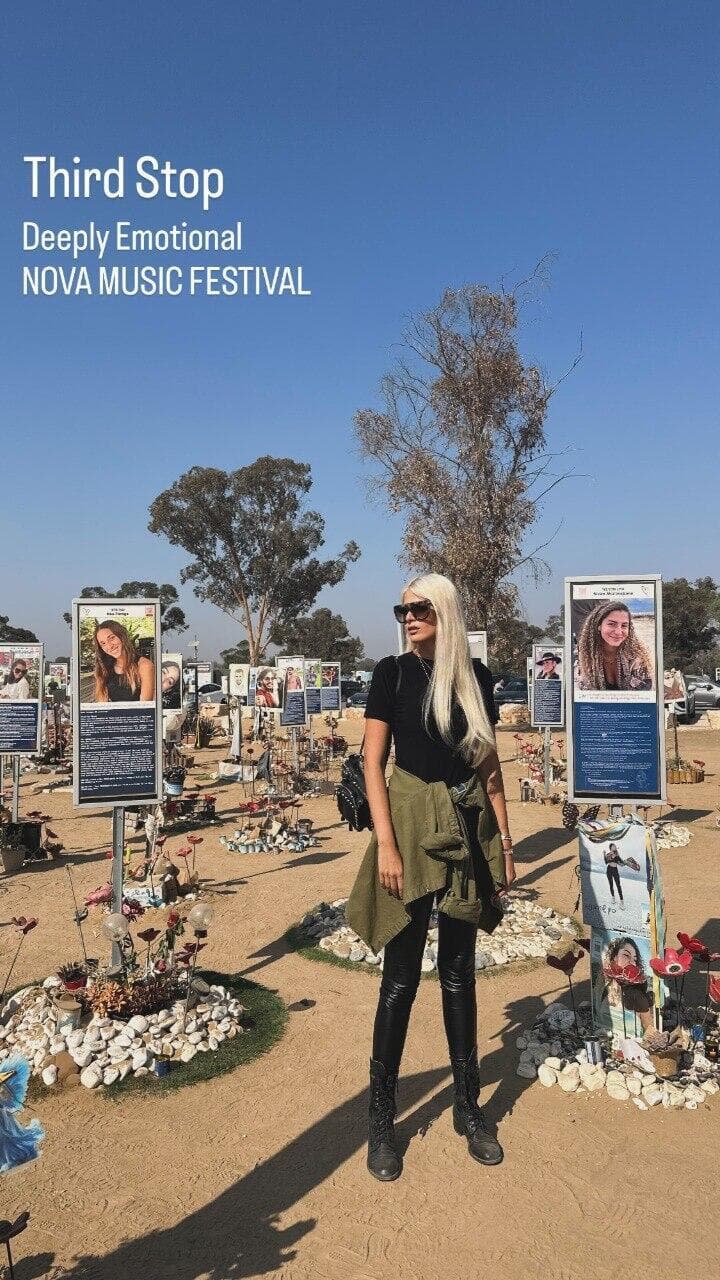
Photos from Matova’s recent visit to Israel were placed alongside her during the interview. She has traveled to Israel for the past two years, including at the Western Wall and the communities near the Gaza Strip. She works with “Friends of Israel,” a nonprofit that focuses on supporting October 7 survivors and soldiers dealing with post-traumatic stress disorder. Matuba says the organization raised $55 million over two years, with the goal of getting people into treatment in three days instead of months. “This work connected me to families and survivors in a way I didn’t expect,” she said. “Helping Israelis is my mission.”
This connection also intensified the shock. “I thought Canada was safe,” she said. “Now I’m careful about what I say in public, even in a taxi. It breaks my heart and reminds me of Germany in 1938.”
Her comparison is rooted in family history. Matova’s grandmother, now 90 years old, survived the Theresienstadt concentration camp. “People ask why there are only 2,000 Jews in Slovakia,” Metova said. “Because most of them were sent to the camps. We can’t forget history, or pretend that nothing happened on October 7.”
Matova says that her grandmother used to describe the early signs of hatred long before the war broke out in full. “She told me frightening stories about what happened, even a year or two before the war began,” Metova said. “Moments like this immediately bring me back to what she warned against. If we allow such things to pass in silence, will it come back? That’s the question that keeps me alert. Where are we going?”
The Legal Front: “There Must Be Consequences”
Metova’s lawyer, Howard Levitt, argues that Uber’s response was slow and lacking transparency. “Uber has never confirmed that the driver has been fired,” Levitt said. “If there are no consequences, it will happen again.”
Levitt says a number of steps are needed, such as the immediate dismissal of the driver, a contractual commitment by all drivers to a strict non-discrimination policy, and a donation from Uber – not to the donor personally, but to an association that provides care for trauma victims in Israel. “An Uber donation will show that they don’t remain indifferent to the situation,” Metova said. Like his client, Levitt also claims that the media attention forced the company to respond. “Without the publication of the story by the National Post, there would have been no response,” Levitt said.
Fear Grows, and What Will Happen Next
Matuba says she’s worried about using the Uber app in the foreseeable future. “In the meantime, I’ll ask friends for help or use different apps,” she said. “I’m also considering moving to Israel.”
Levitt describes the incident as part of a broader change in Canada. He argues that anti-Semitism has become more overt and even normal, as law enforcement responses are inconsistent. When asked if he would consider leaving the country himself, Levitt said no, but noted that many people he knows are considering that possibility.

Matova says her goal is not just to achieve personal justice, but to set a clear standard for how companies should respond to hate crimes. “When a driver says something like that, you can’t treat it as a customer service problem,” she said. “This is discrimination, and it’s dangerous.”
For her, that night on November 30 was more than just a humiliating ride. She calls it a warning sign about what happens when prejudice goes unanswered. “History shows where silence leads,” she said. “That’s why we can’t ignore it.”
Translated from English: Yogev Israeli